
Build Your Personal First Aid Kit
Build a first aid kit that suits your household and know how to use what’s inside. This practical 23-page guide covers essential supplies, common injuries, everyday medicines and selected herbal options, with shopping priorities, printable records and quick-reference pages to keep with your kit.
This first aid guide includes useful tips and plans so that you stay prepared.
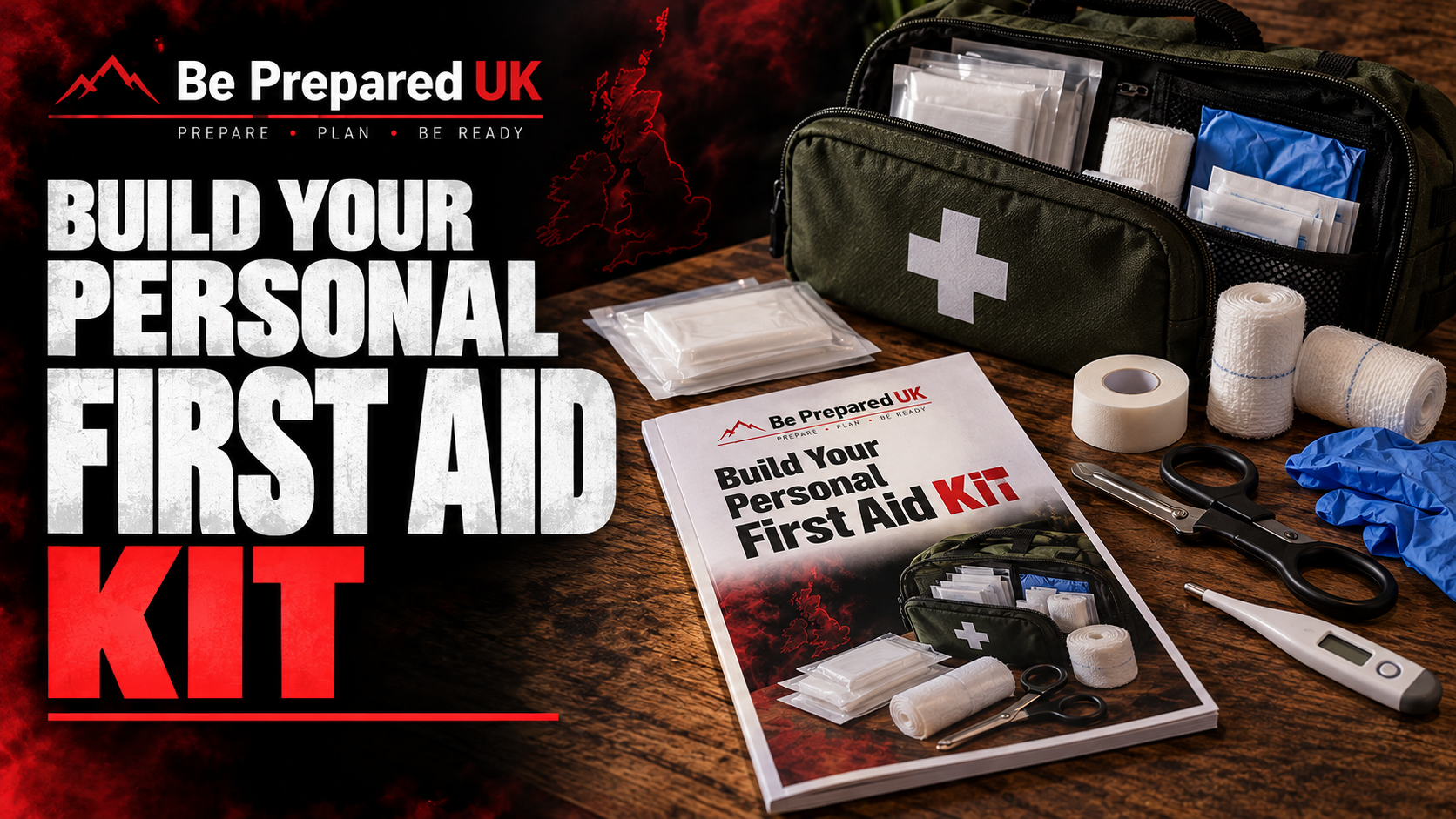
A useful first aid kit starts with understanding what your household actually needs. This guide helps you choose the supplies, organise them properly and prepare for the injuries and illnesses you are most likely to face.
Across 17 chapters, it covers practical first aid, personal medical needs and preparations for times when getting professional help becomes difficult. It also examines selected herbal and natural options, explaining their uses, limitations and important precautions.
What’s inside the guide?
-
Make the first minute count
Understand the immediate priorities when somebody becomes injured or seriously unwell. Covers recognising danger signs, adult CPR, choking and seizures, alongside the importance of practical training.
-
Build a kit you can actually find things in
Organise your supplies into clearly labelled sections so you can find what you need quickly. Includes storage ideas for your home, car, grab bag and replacement supplies.
-
What to buy for wounds and bleeding
A practical breakdown of dressings, gloves, saline, bandages and other core supplies, with suggested starting quantities. Explains which specialist items require training before they earn a place in your kit.
-
Cuts, grazes and infected wounds
Covers cleaning and dressing ordinary wounds, using closure strips appropriately and recognising signs that an injury needs further attention. Includes additional considerations for people with diabetes or poor circulation.
-
Burns, sprains, nosebleeds and bites
Practical guidance on common injuries, including burns, suspected fractures, insect stings and tick removal. Also covers head injuries, eye contamination and problems caused by excessive heat or cold.
-
Your everyday pharmacy
Looks at common over-the-counter medicines for pain, allergies, digestive problems and minor skin conditions. Includes important precautions, child-specific considerations and useful supporting equipment.
-
Diarrhoea, vomiting and safe water
Explains the importance of replacing lost fluids, recognising dehydration and preventing illness from spreading around your household. Covers oral rehydration supplies and the role of safe water and good hygiene.
-
Dental problems without a dentist
Find out which temporary dental supplies are worth keeping for a lost filling, loose crown or sharp edge. Explains the limits of temporary repairs and the warning signs of a spreading dental infection.
-
Breathing, allergies and chronic conditions
Prepare around your household’s individual needs, including asthma, severe allergies and diabetes. Covers prescribed emergency medicines, written treatment plans and supplies that cannot simply be replaced with a general first aid product.
-
Cleanliness will save more problems than gadgets
Covers the hygiene supplies and everyday routines that help prevent avoidable illness. Includes handwashing, waste handling, separating clean and dirty equipment, and preparing a clean area for wound care.
-
Herbal replacements that earn their place
A detailed look at selected options such as honey, medicinal peppermint oil, ginger, senna and medical-grade honey dressings. Explains what each may help with, important precautions and which popular claims are not worth relying on.
-
Prescription medicines and antibiotics
Build an individual medication plan covering regular prescriptions, storage requirements, allergies and continuity of treatment. Explains why antibiotics require a condition-specific treatment plan and cannot be treated as interchangeable supplies.
-
Real-world situations: what you would do
Work through familiar situations, including a deep kitchen cut, kettle scald, vomiting child, swollen cheek and injured ankle. Connects the supplies in your kit with practical priorities and warning signs.
-
What to stock first and how much
A prioritised buying plan with illustrative starting quantities for a household of around four people. Helps you cover the essentials first, then adapt your supplies to your family’s actual needs.
-
Keep the kit safe, usable and current
Simple monthly checks and more thorough stock reviews help keep your supplies ready. Covers expiry dates, damaged packaging, batteries, medicine storage and changes in your household’s medical needs.
-
Print and keep these records in the lid
Printable worksheets for household medical information, allergies, regular medicines and emergency contacts. Also includes treatment notes and a supply rotation record so important details remain available on paper.
-
Two pages you can use in a hurry
Quick-reference pages bring together the guide’s key priorities for bleeding, burns, choking, dehydration and other urgent situations. Designed to keep alongside your supplies for easy reference.