
What the Government’s New Campaign Means for You
On 22 October 2026, the UK government launched its new Be Ready campaign, encouraging households to prepare for at least three days of disruption. The advice covers emergencies such as severe weather and flooding, but the preparations are equally relevant when electricity, water supplies, communications or essential services fail. It's an important development that brings emergency preparedness firmly into the national conversation.
But what does being prepared actually mean for an ordinary British household? How much water should you store, which supplies are worth buying, and is three days really enough? We've examined the official Be Ready UK guidance and put together a practical guide to help you protect your household, avoid unnecessary spending and prepare for the disruptions that could affect everyday life.
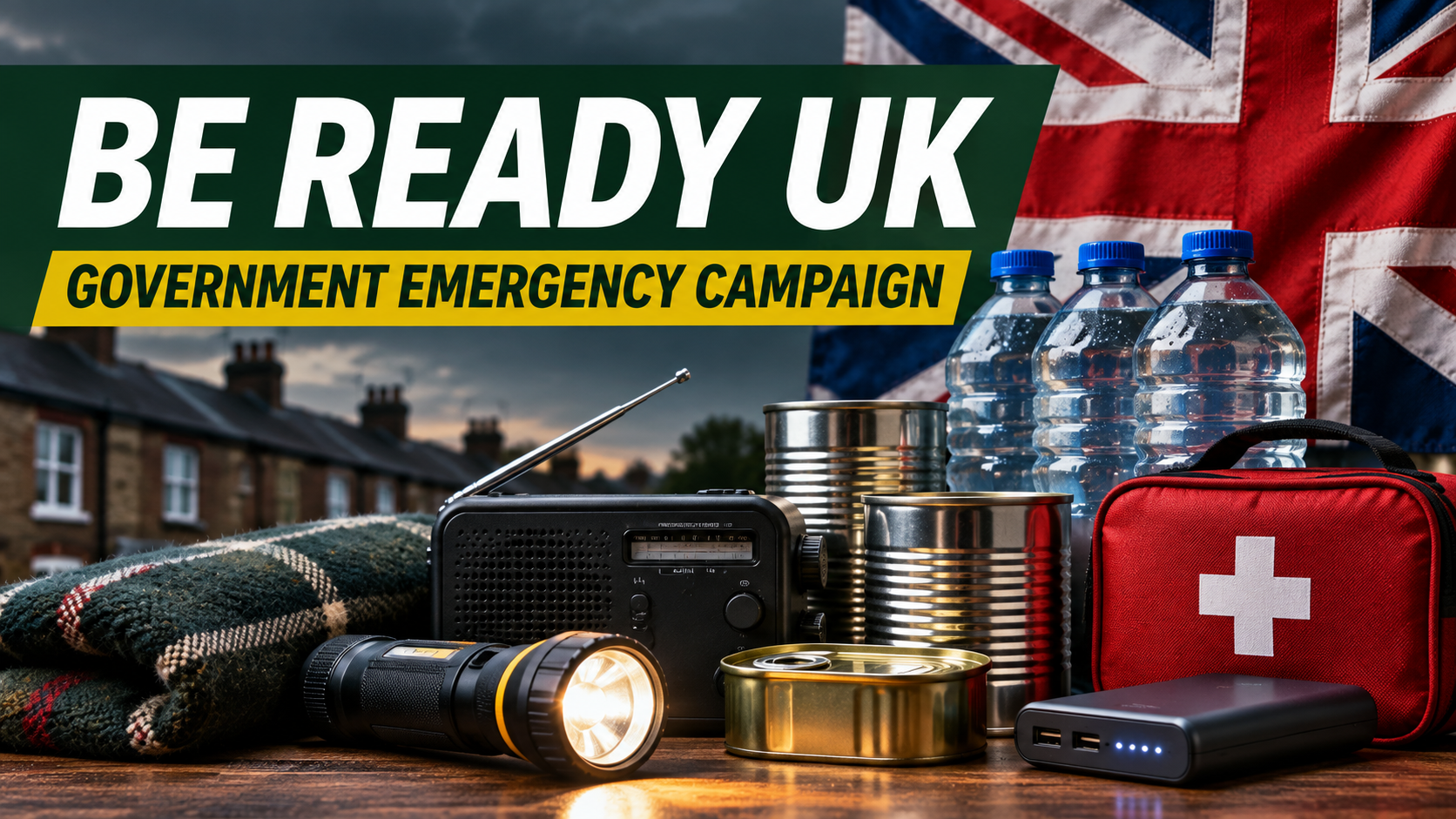
The Government Wants Britain to Be Ready
The new national campaign asks households to prepare for 72 hours without normal services. Here's what that means in practice, and how you can go further.
What Is the Government's Be Ready Campaign?
Launched by the Cabinet Office on 22 October 2026, Be Ready is a three-year government campaign designed to improve emergency preparedness throughout the United Kingdom.
The campaign builds on the government's earlier Prepare guidance, first published in May 2024. Although much of the practical advice remains unchanged, the new campaign is intended to reach a much wider audience and encourage more households to take action.
The government has worked with more than 500 organisations, including charities, local authorities, businesses and emergency services, to help spread the message.
According to research highlighted in the official launch announcement, just 13% of people in the UK felt prepared for an emergency that could cut them off from essential services. Meanwhile, 84% wanted the government to provide more information about preparing.
These are significant figures. They suggest that most households recognise the importance of emergency preparedness but may be unsure where to start.
Why this matters: The government is now actively encouraging households to become more self-sufficient during emergencies. The aim is to reduce pressure on emergency services, allowing them to prioritise people who need immediate assistance.
Why Is the UK Government Asking People to Prepare?
The official Be Ready campaign focuses heavily on everyday emergencies such as storms, flooding and other severe weather events. These can disrupt electricity, water, telecommunications and internet access.
However, the same preparations are useful for a much wider range of disruptions.
Cyberattacks, infrastructure failures, transport disruption and problems affecting essential supply chains can all have consequences for ordinary households.
Modern infrastructure is heavily interconnected. A major electricity failure can affect mobile communications, electronic payment systems, heating controls and parts of the water supply network.
Even when supermarkets have food available, problems with payment processing, refrigeration or distribution can make shopping difficult.
The important point is that you don't necessarily need to prepare separately for every possible emergency. Preparing for the loss of essential services gives you a useful foundation for dealing with many different types of disruption.
Be Ready UK Checklist: What Should You Have at Home?
The government's emergency checklist recommends having enough essential supplies to manage for three days.
These are the main categories to concentrate on.
Water and Food
- Three days of bottled drinking water.
- Non-perishable food that needs no cooking.
- A manual tin opener.
- Suitable baby food and pet food where needed.
Lighting and Warmth
- LED torches and spare batteries.
- Battery-powered lanterns.
- Warm clothing and additional blankets.
- Sleeping bags or other suitable bedding.
Communications
- Battery-powered or wind-up FM radio.
- A charged mobile phone power bank.
- Suitable charging cables.
- Important phone numbers written on paper.
Health and Hygiene
- A properly equipped first aid kit.
- Essential prescription medication.
- Hand sanitiser and wet wipes.
- Toilet paper and other hygiene essentials.
Money and Documents
- A sensible amount of emergency cash.
- A mixture of notes and coins.
- Copies of important documents.
- Insurance and emergency contact details.
Household Planning
- An agreed family meeting point.
- Knowledge of utility shut-off locations.
- Awareness of local flood and weather risks.
- A plan for anyone requiring extra assistance.
How Much Emergency Water Should You Store?
Water should be one of your first priorities. The government's guidance recommends storing three litres of drinking water per person, per day.
For a three-day emergency, this means:
| Household Size | Water for 3 Days |
|---|---|
| 1 person | 9 litres |
| 2 people | 18 litres |
| 3 people | 27 litres |
| 4 people | 36 litres |
| 5 people | 45 litres |
These figures cover drinking water only. You'll need additional water for cooking, washing, cleaning and personal hygiene.
A family of four following the government's minimum recommendation would need 36 litres of drinking water for three days. Extending that to a week increases the amount to 84 litres.
That's a substantial quantity, particularly for people living in smaller properties. However, water can be stored in several smaller containers rather than one enormous tank.
Keep bottled water in a cool place away from direct sunlight and follow the storage instructions. If you fill your own containers, use food-grade containers suitable for drinking water, clean them correctly and maintain an appropriate replacement schedule.
A water filter or purification system may provide additional options, but you need to understand its limitations. Different systems treat different contaminants, and ordinary portable filters may not remove viruses, chemicals or dissolved pollutants.
What Emergency Food Should You Keep?
The government recommends three days of non-perishable food that can be eaten without refrigeration or cooking.
That last point is particularly important. Many households have well-stocked cupboards containing pasta, rice and frozen food, but these become much less useful when electricity and gas are unavailable.
For your emergency food supply, concentrate on things that can form proper meals without heating.
Tinned meat and fish, baked beans, tinned vegetables, crackers, oatcakes, dried fruit and nuts are all useful choices. Choose foods you already enjoy eating so they can become part of your normal shopping rotation.
You could combine corned beef with crackers and tinned vegetables, or use tinned fish with oatcakes and ready-to-eat beans. The meals may be fairly basic, but they are practical, filling and require no cooking equipment.
Don't overlook the manual tin opener. It's surprisingly easy to fill a cupboard with tins and forget that most people now rely on an electric opener or ring pulls.
Practical tip: Plan three actual days of meals using your stored food. Check that every meal can be prepared with the water and equipment you expect to have available during an emergency.
How Should You Prepare for a Power Cut?
A power cut can create several problems at once. Lighting is the most obvious, but heating, communications, refrigeration and electronic payments may also be affected.
Lighting
Keep at least one reliable LED torch somewhere you can find it in the dark. A battery-powered lantern is useful for illuminating a room without holding a torch continuously.
Rechargeable lighting can work well, provided you have a way to recharge it. Keeping some equipment that runs on ordinary replaceable batteries gives you another option.
Keeping Warm
During winter, losing central heating can become a serious concern, particularly for older people, young children and anyone with additional health needs.
Keep warm clothing, blankets and sleeping bags readily available. Closing internal doors and curtains can help retain warmth in a smaller area of your home.
Consider moving everyone into one suitable room rather than trying to keep the entire property warm.
Communication
A charged power bank can keep your phone operating after the electricity fails. However, mobile networks can also experience disruption, particularly during widespread or prolonged outages.
Keep a battery-powered or wind-up FM radio available so you can receive news and emergency information independently of your broadband connection.
Carbon monoxide warning: Never use barbecues, outdoor camping stoves or fuel-powered generators inside your home, garage or another enclosed space. Carbon monoxide poisoning can be fatal. Only use heating and cooking equipment in locations approved by the manufacturer, following all ventilation and safety instructions.
First Aid, Medication and Medical Equipment
The government's checklist includes first aid supplies and essential medication. These deserve more consideration than simply buying a cheap first aid box and putting it in a cupboard.
A functional household kit should include sterile dressings, suitable bandages, plasters, medical tape, disposable gloves, a thermometer, appropriate wound-cleaning supplies and other items relevant to your family's needs.
Learn how to use the equipment before you need it. Basic first aid knowledge can be especially valuable when emergency services are dealing with widespread disruption.
If anyone in your household takes regular medication, plan repeat prescriptions carefully. Government guidance recommends requesting them up to five working days before you need them.
People who depend on refrigerated medication or electrically powered medical equipment should discuss suitable emergency arrangements with their healthcare provider or equipment supplier.
For more practical guidance, see our Build Your Personal First Aid Kit guide.
What Is the Priority Services Register?
One of the most useful parts of the Be Ready campaign is its recommendation that eligible households sign up to the Priority Services Register (PSR).
This free service helps electricity, gas and water providers identify customers who may need additional assistance during interruptions to essential services.
Eligibility can include people of pensionable age, households with children under five, people with disabilities or long-term medical conditions, and those who rely on certain medical equipment.
Registering helps providers understand your needs and identify suitable support during an outage. It doesn't guarantee an uninterrupted supply or immediate restoration.
You can check eligibility and find registration details at thepsr.co.uk.
In Northern Ireland, similar arrangements are available through utility Customer Care Registers.
Make a Household Emergency Plan
Having supplies at home is useful, but everyone in your household also needs to know what to do if normal communications or services become unavailable.
Start by agreeing where family members should meet if they cannot return home or contact each other.
Write down important contact numbers, including relatives, schools, neighbours and anyone who may need checking on during an emergency.
Find your property's main water stopcock, electrical isolation point and gas shut-off location where applicable. Make sure you understand how to operate them safely if required.
Check whether your home is in an area at risk of flooding and find out how to receive official local warnings.
Keep a folder containing important insurance details, identification, emergency contact information and a list of regular medication.
Consider preparing a small grab bag with essential documents, medication and other items you might need if you are told to evacuate.
In England, Scotland and Wales, you can report a power cut by calling 105. In Northern Ireland, use 03457 643643.
Is Three Days of Emergency Supplies Really Enough?
The government's recommendation to prepare for three days provides an achievable starting point for households that currently have little or nothing set aside.
However, some emergencies can last considerably longer than 72 hours.
Severe storms can damage electricity infrastructure across large areas. Flooding may prevent access to homes and businesses. Significant damage to water infrastructure can take time to repair.
These disruptions can also overlap. A household affected by a lengthy power cut might simultaneously experience problems with heating, communications and obtaining replacement supplies.
That's why Be Prepared UK recommends building towards at least seven days of essential supplies once you've covered the government's initial three-day target.
For households with enough space and a suitable budget, maintaining additional supplies beyond a week can provide even more flexibility.
Our recommendation: Treat the government's three-day checklist as your starting point. Build towards seven days of food, drinking water and essential household supplies, with additional reserves where practical.
This is independent advice from Be Prepared UK, rather than an additional government requirement.
The aim is to give yourself options. Every additional day of supplies can reduce the immediate pressure to find food, water or other essentials during a prolonged disruption.
Don't Forget to Test Your Preparations
Buying emergency equipment is straightforward. Discovering whether it works when you actually need it is another matter.
Check that your torches work and that you have the correct batteries. Make sure your power bank holds a charge and that you can receive local radio stations on your emergency radio.
Open your food cupboard and see whether you could prepare breakfast, lunch and an evening meal without using electricity, gas or additional tap water.
Check your first aid kit for missing supplies and expired products. Make sure your household knows where the emergency supplies are stored.
It's also worth checking what will happen to your heating system when the electricity fails. Even gas central heating often needs electricity for controls, pumps and ignition.
The government's advice suggests reviewing your supplies every six months. That's a sensible opportunity to rotate food, check dates and make sure equipment still works.
How to Start Preparing Today
You can make a useful improvement to your household's emergency preparedness in less than an hour, without buying any specialist survival equipment.
Your First Five Steps
- Check your cupboards. Work out how many complete meals you could make without electricity or cooking.
- Count your drinking water. Compare what you have against the government's three-litre-per-person daily recommendation.
- Find your emergency lighting. Test your torches and check that you have suitable spare batteries.
- Write down essential contacts. Include family members, neighbours, local services and emergency information.
- Identify what is missing. Add one or two items to your regular shopping until you've covered three days of essential needs.
Once you've completed these steps, concentrate on building your supplies gradually. It's generally easier to maintain a sensible emergency cupboard when the contents are foods and household items you already use.
If you're working with limited storage space, prioritise water, ready-to-eat food, medication and a reliable way to receive information. These address some of the most immediate problems households face during disruptions.
Be Ready UK: A Sensible Starting Point
The launch of the government's Be Ready campaign marks an important development in how emergency preparedness is being discussed across Britain.
For years, many people associated preparing for emergencies with extreme survival scenarios. The government's new approach acknowledges that ordinary households benefit from maintaining basic emergency supplies and having a plan.
At Be Prepared UK, we've always believed that sensible preparedness should be practical, affordable and based on the risks people actually face.
The government's three-day recommendation is a useful place to begin. Building towards seven days, understanding the limitations of essential infrastructure and knowing how to manage without normal services will leave your household better equipped to deal with longer disruptions.
The most useful preparation is the preparation you've already completed before you need it.
Official Guidance and Further Resources
- UK Government Be Ready Campaign - Official emergency preparedness advice and checklist.
- Government Campaign Launch Announcement - Published 22 October 2026.
- Priority Services Register - Check eligibility for additional support during utility interruptions.
- Join the Be Prepared UK Community - Free community for practical UK emergency preparedness.
- Recommended Prepping Gear - Practical equipment and supplies for UK households.